
RWT
Model: RWT Rubber-Wheel Transit
Measuring trolleys built to order for rubber-tired metro and guided transit systems — guideway, plinth and switch geometry, proven on several networks
Rubber-tired systems have no standard track, so there is no standard RWT: each trolley is designed for one network's guideway, with contact and non-contact sensors chosen for what that network needs to measure. The specifications on this page are those of the RWT built for Rennes.
Measurement Tasks
At a glance
RWT in Detail
Overview & Specifications
Why Choose RWT
- Your network runs on rubber tires (VAL or a similar guided transit system) and standard rail geometry equipment does not fit it
- Guide beam, plinth or switch geometry and wear need to be measured to your own tolerances
- You want a supplier who has already built such trolleys for other networks
- You need both contact and non-contact measurement with real-time display
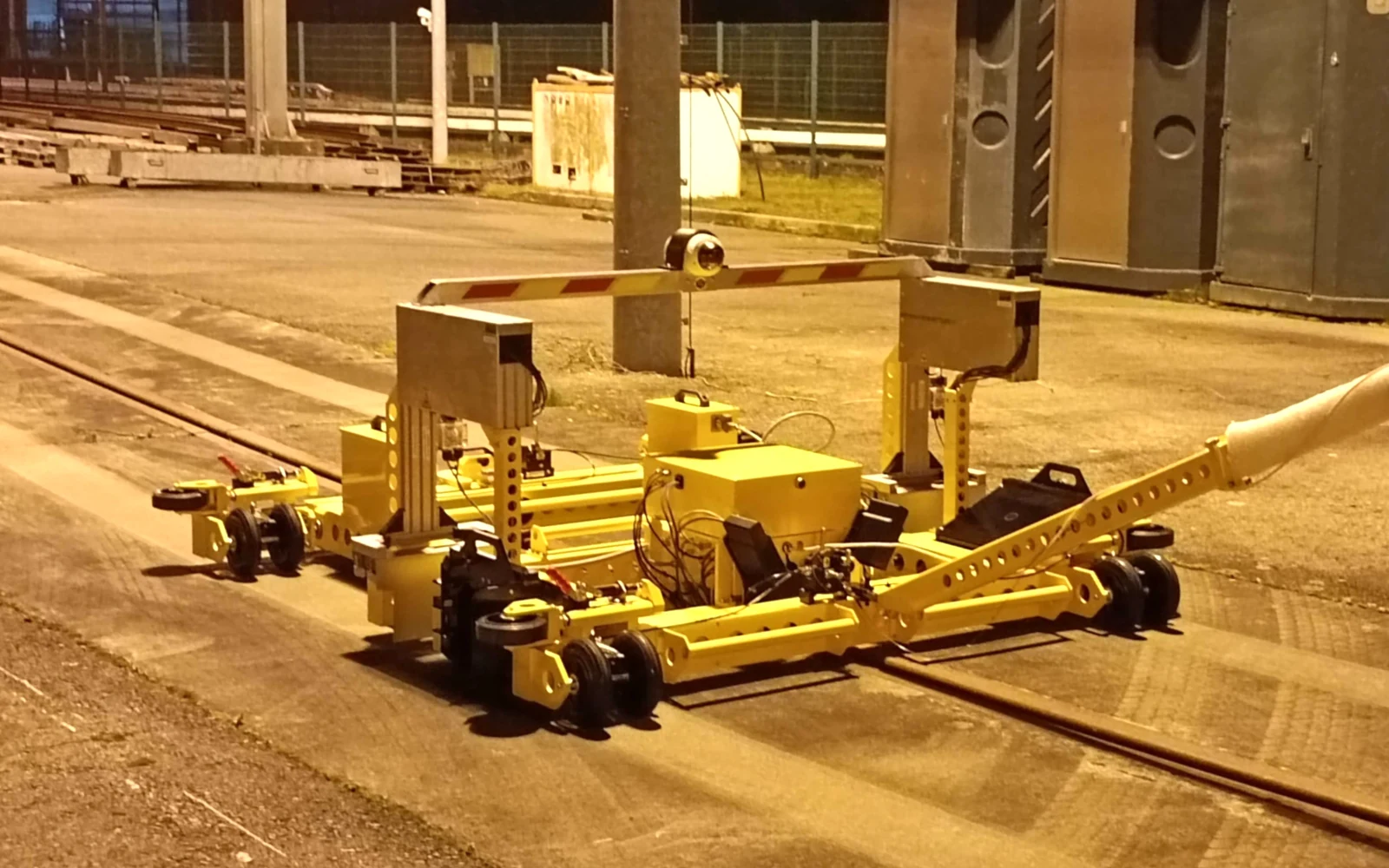
RWT is not a catalog product. Every rubber-tired network has its own guideway, and we design the trolley for it: which surfaces are measured, with which sensors, on which wheels it runs and how it passes the switches. We have done this more than once: an RWT has been measuring the rubber-tired line of Taipei Metro (TRTC) since 2010, another was built for the metro in Rennes (France), and the experience carries over to the next one. Custom measuring systems are part of what KZV does: the mechanics, the sensors and the software come from one workshop, so a trolley for an unusual guideway is a project we can take on with a clear idea of how it will be built, tested and evaluated.
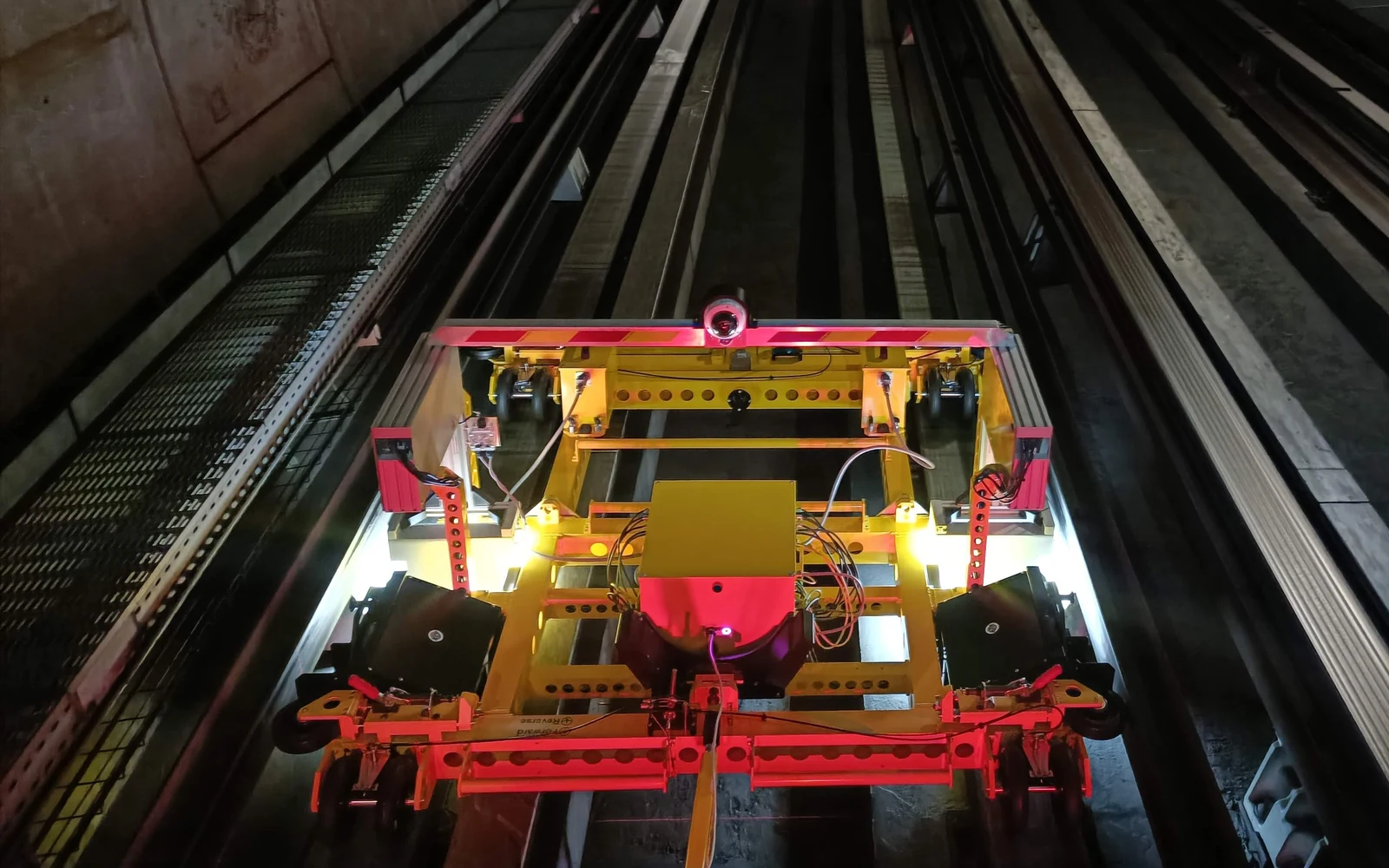
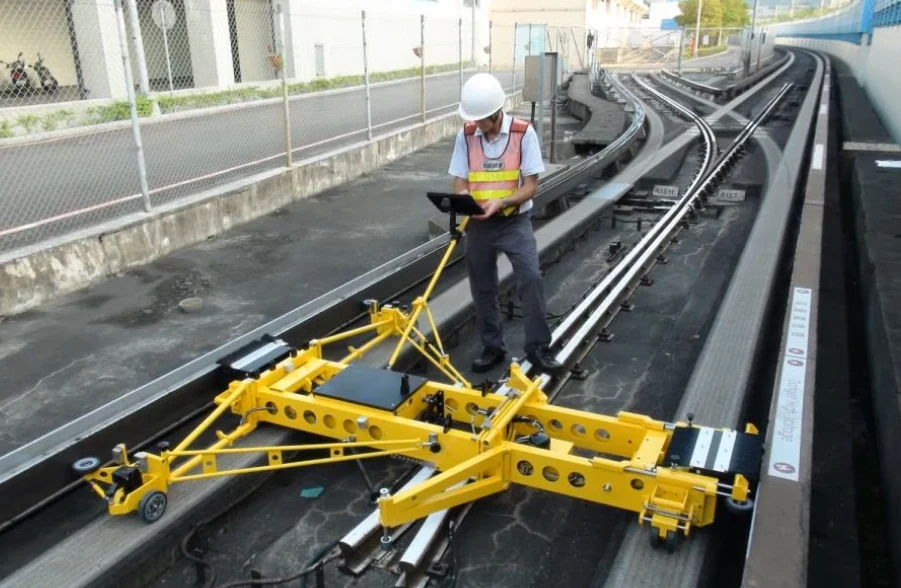
As an example, the RWT built for Rennes measures the H-beam guide rail and the running plinth with contact wheels and non-contact 3D laser cameras (triangulation), shows the results on a touchscreen during the run and compares them with the nominal profile or with a previous measurement. It splits into two main and three small parts, so setup or removal takes under ten minutes. The specifications below are those of that trolley; yours would be defined with you.
- Dual sensor technology — contact wheels + non-contact 3D laser cameras
- Real-time touchscreen display — measurements shown during the run and compared with the nominal profile
- Synchronized camera records — visual documentation linked to measured data
- Comparison capability — real-time comparison with the nominal profile or a previous measurement
- RWT 11 software — PC evaluation and assessment software included
- Built to order — sensors, wheels and measured quantities defined per network; RWT in service in Taipei (since 2010) and Rennes
Technical Specifications
Weight
~100 kg
Max Speed
10 km/h
Battery
Removable Li-Ion, 5 hours
Vertical Wheels
4 double, 125 mm diameter
Horizontal Wheels
4 single, 100 mm diameter
Sensors
3D laser cameras (triangular principle)
Setup/Removal
<10 minutes
What It Measures
Every RWT is different, so there is no fixed list. The trolley records the geometry of the guideway and verifies the position, alignment and wear of the joints, guide bars and running beams against the tolerances that apply on the network.
Download Datasheet
Full technical specifications as a PDF:
Interested in RWT?
Contact us for detailed specifications, pricing, and delivery information