What is measured
Rail corrugation is periodic wear of the running surface: short waves that cause noise, vibration and faster deterioration of track and vehicles. It is measured as the longitudinal irregularity of the rail surface and evaluated in the wavebands D1 to D4, from 10 mm to 1 m, the bands used for the acceptance of grinding and milling under EN 13231-3; Gekon 11 adds a fifth band, D5, with limits the customer defines. For noise assessment the same data is analyzed as a roughness spectrum in 1/3 octave bands. The GEKON trolleys measure without contact, with laser sensors of 0.15 μm resolution.
Which system?
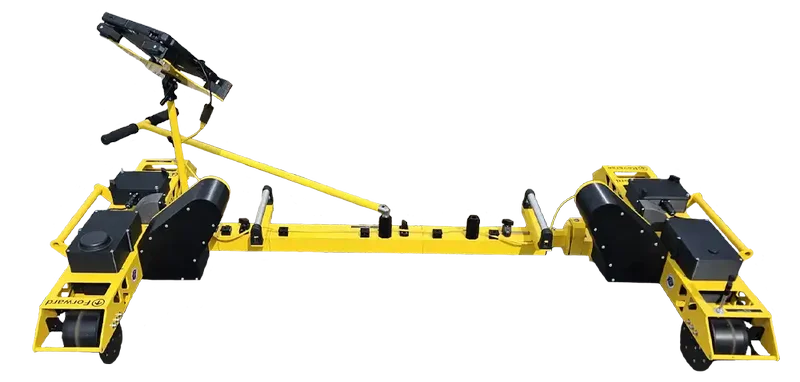
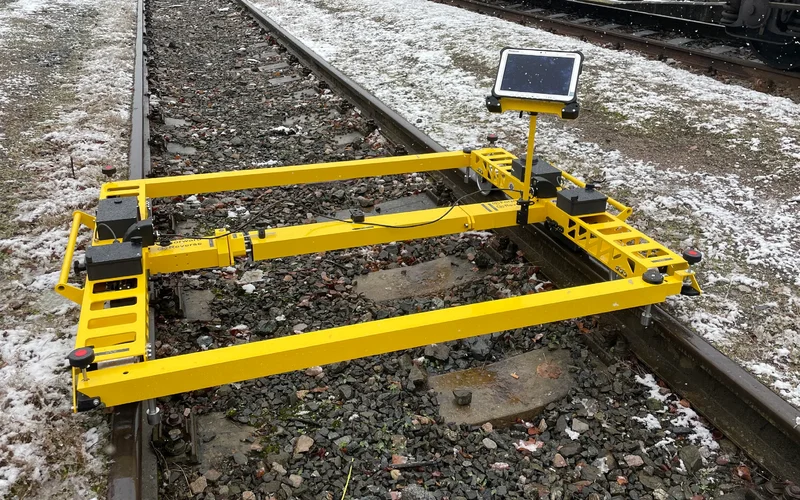
- GEKON Modular: 27 to 30 kg, walking speed, vignole and grooved rails, quickly lifted off the track, so it can be used without closing the line. The choice for routine corrugation monitoring and grinding program planning.
- GEKON Big Foot: the towed member of the family, 40 kg, up to 15 km/h behind a rail vehicle, passes switches without stopping. The choice for long distances.
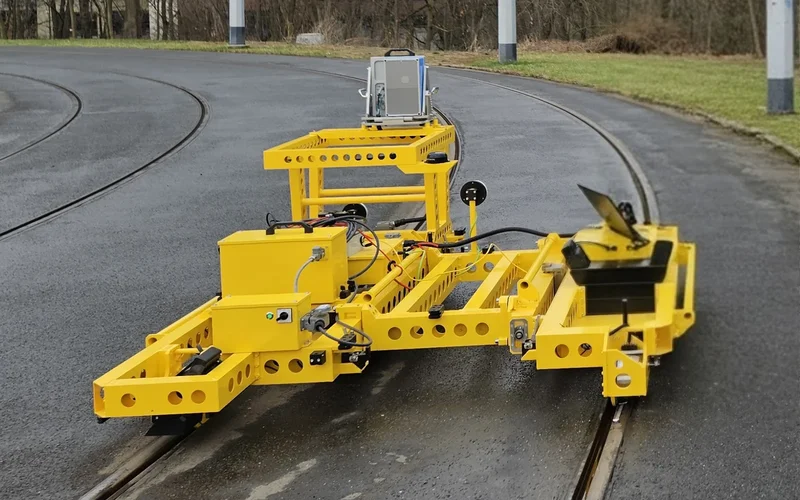
- TURTLE: towed measurement of geometry, profiles and clearance on tram and railway networks, evaluated in Gekon 11 for corrugation.
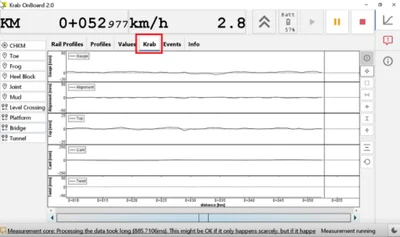
The data is recorded with RC Droid 3.0 on Android or Krab OnBoard on Windows and evaluated in Gekon 11: section evaluation, grind reports per waveband, GQI reporting and 1/3 octave analysis.